Resume Keywords That Recruiters (and ATS) Are Looking For
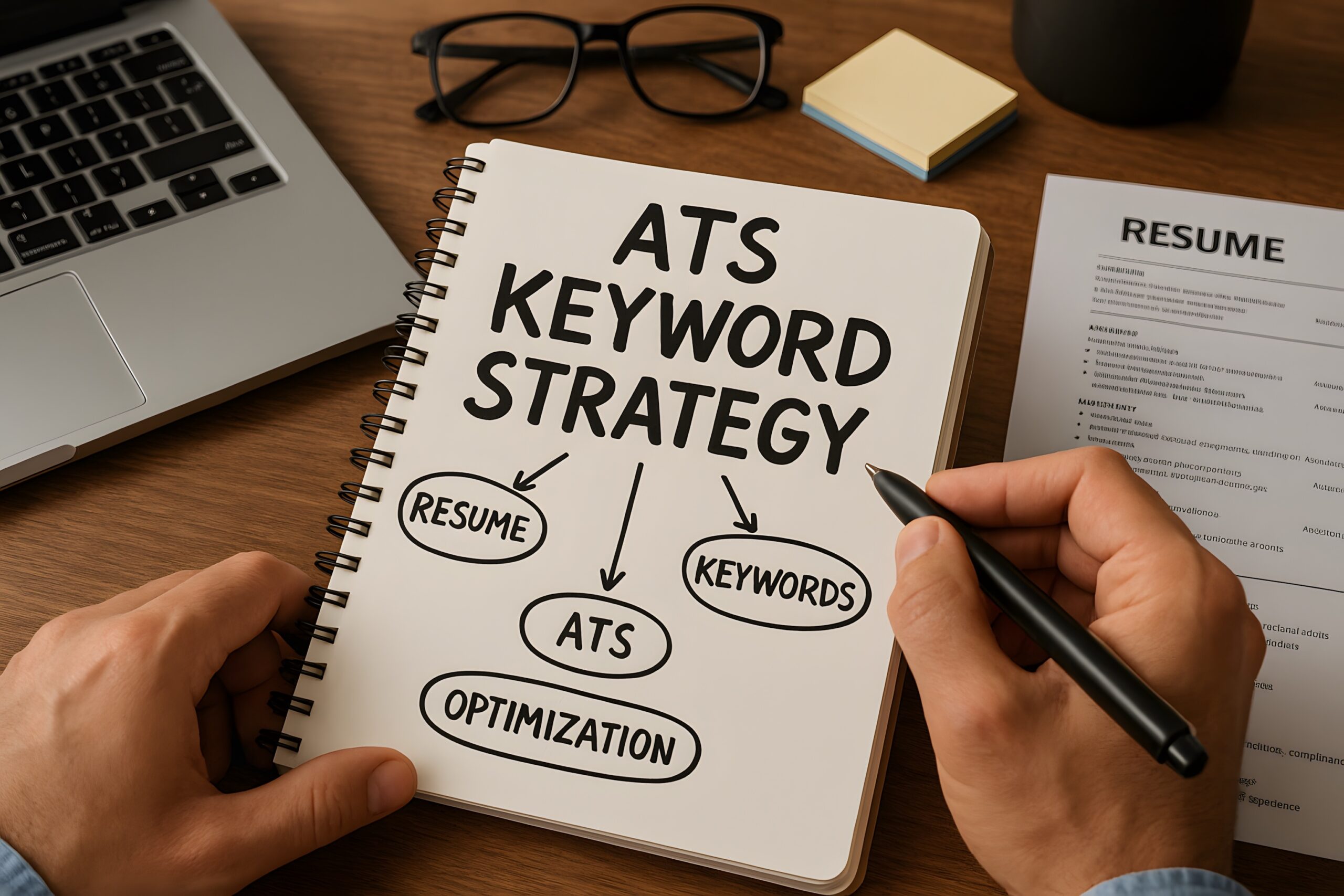
Why Resume Keywords Matter
You’ve probably been there — you apply for a job, wait for weeks, and hear nothing back. The frustrating truth is that many resumes never even reach a recruiter. They get filtered out by an applicant tracking system (ATS) before a human ever sees them.
That’s why ATS resume keywords are so important. These are the exact skills and terms hiring teams (and their software) are looking for. If you include them thoughtfully, you give your resume a much better chance of making it past the filters and landing on a recruiter’s desk.
This blog walks you through how ATS software works, how to find the right keywords, and how to build an ATS friendly resume that gives you a real edge in your job search.
Understanding Applicant Tracking Systems
Why Companies Use ATS
Recruiters can receive hundreds of applications for a single job — sometimes even thousands. It’s not practical to read every resume individually. That’s where ATS software comes in. It acts as a first filter, scanning applications to find those that best match the job requirements and moving them to the top of the list. It not only speeds up the hiring process but also helps ensure consistency, allowing recruiters to focus their time on the most promising candidates.
How ATS Reads Your Resume
Think of ATS as a very picky reader. When you upload your resume, the system scans it, breaks it into sections like work history and skills, and looks for matches with the job description. It assigns a score based on how many relevant terms it finds — and in which sections. The higher your score, the higher your resume ranks in the recruiter’s dashboard.
How to Identify the Right ATS Resume Keywords
Step 1: Study Job Descriptions
Pull up several job postings for the role you want. Read them carefully and look for words that keep popping up — job titles, technical skills, certifications, and even specific tools.
Step 2: Focus on Hard Skills
These usually carry the most weight in ATS scoring. Examples include:
- Technical Skills: Python, SQL, Salesforce, SAP
- Certifications: PMP, AWS Certified, Six Sigma
- Industry Terms: GMP, clinical trials, regulatory compliance
Step 3: Add Soft Skills — With Context
Soft skills matter but avoid vague terms like “team player.” Instead, use examples that show the skill in action — like “led weekly cross-functional meetings to improve reporting accuracy.”
Tip: Keep a “master resume” with all your experience, projects, and skills. When applying for a role, tailor it by weaving in the ATS resume keywords that match that specific job posting.
Building an ATS-Friendly Resume
Keep the Layout Clean
Use a single-column, ATS friendly resume template with standard headings — Summary, Skills, Experience, and Education. Avoid fancy formatting, images, or multi-column designs. These can break when the ATS tries to read them.
Place Keywords Where They Count
Think of your resume like a map — recruiters and ATS software both look for key details in predictable places.
Section Keyword Placement Tips
Professional Summary: Highlight 3–4 top skills or accomplishments at the very top.
Skills Section: Include a bulleted list of tools, platforms, and certifications.
Experience Section: Show results tied to each keyword: “Implemented SAP solution that reduced processing time by 15%.”
Stick to Simple Formatting
Use fonts like Arial or Calibri and save your resume as a .docx file unless a PDF is specifically requested. Avoid headers, footers, or tables that might get scrambled.
Examples of Strong ATS Resume Keywords
Here are some examples of keywords commonly used in different industries:
- IT & Tech: Cloud Computing, API Development, Cybersecurity, DevOps, Data Visualization
- Healthcare: Patient Care, EMR, HIPAA Compliance, Clinical Trials, Risk Assessment
- Finance: Risk Management, Financial Modeling, Audit, Compliance, Forecasting
- Marketing: SEO, Campaign Management, Social Media Analytics, CRM
These examples are just starting points — the most effective skills for resume optimization always mirror the exact wording in the job posting.
Common ATS Mistakes to Avoid
- Sending Generic Resumes: Tailor your resume for each job to improve your match score.
- Keyword Stuffing: Using the same word repeatedly makes your resume sound robotic.
- Complicated Layouts: Columns, images, and graphics can confuse parsing.
- Leaving Out Important Details: List certifications exactly as mentioned in the job ad.
Creating Your Own ATS-Friendly Resume Template
You don’t need to buy a special template, you can build one yourself:
- Use clear section headings and consistent formatting.
- List jobs in reverse chronological order.
- Use short, punchy bullet points that start with action verbs.
- Keep margins generous for readability.
Read More: Our blog Resume Tips for Contract Roles shares additional tips for structuring a resume that performs well for both contract and full-time roles.
Making a Resume Recruiter-Friendly
Getting through ATS is only half the battle and a recruiter still has to be impressed.
- Keep It Short: Stick to one or two pages.
- Show Measurable Impact: Use numbers where possible — “Cut onboarding time by 25%.”
- Customize for Each Job: Even minor tweaks can make a big difference.
Also Read: How to Build a High-Impact Tech Resume for Contract Jobs for more ways to make your resume engaging and results-focused.
Step-by-Step Checklist to Optimize for ATS
- Gather 3 to 5 job descriptions for similar roles.
- Highlight overlapping skills, tools, and requirements.
- Add those ATS resume keywords to your summary, skills, and experience sections.
- Use a single-column, ATS friendly template.
- Run your resume through a free ATS checker to measure your match score.
- Make minor adjustments and re-test until you’re satisfied.
Testing Your Resume Before You Apply
- Use Free Tools: Jobscan and similar platforms help you see how well your resume matches a posting.
- Plain Text Test: Paste your resume into a text editor — if it looks messy, the ATS will likely misread it.
- Proofread Carefully: Misspelled keywords can cost you a match.
Conclusion
Building an ATS friendly resume isn’t about stuffing it with as many buzzwords as possible. It is about making sure your resume speaks the same language as the job description. When you take the time to research postings, weave in the right ATS resume keywords, and present everything in a clear, simple format, you significantly boost your chances of getting noticed.
A customized resume tells employers that you’ve put in the effort and that you’re serious about the role, making it much easier for them to see you as the right fit.
Explore our ATS-friendly resume tips and High-Impact Tech Resume guide to start making a resume that gets past applicant tracking systems and into the hands of recruiters.
Open roles at ArtechYou also might be interested in
 Are You Scared of the 2025 Job Market Here Are 5 Sectors (2)
 From fresh graduates to experienced professionals, everyone shifts in[...]
 how to direct hire ai specialists who actually stay in your tech stack scaled
 AI hiring is no longer a side initiative owned[...]

When it comes to job applications, understanding the difference between[...]