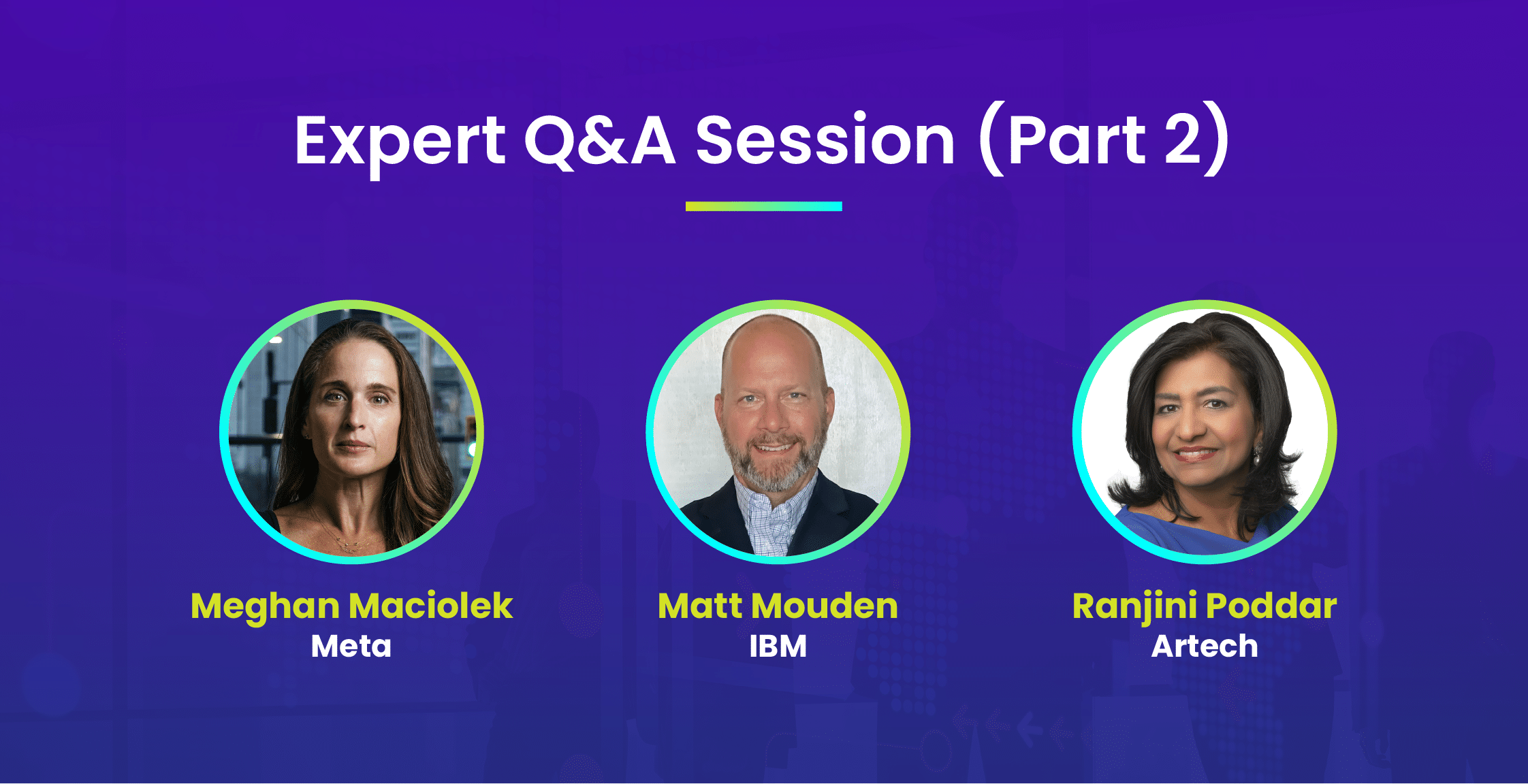
In our previous article, we explored the current challenges in workforce management and actionable solutions from top industry leaders.
Now, we look ahead at the future of the staffing industry, sharing insights from these leaders on emerging trends and how you can prepare for rapid change. Let’s begin.
8. What key trends do you see shaping the future of contingent workforce management and SOW engagements?
Ranjini Poddar (Artech):
“Skills-based and flexible workforce models are essential due to the talent gap. Employee well-being and engagement are just as important for contingent staff. AI, automation, and analytics are changing the game—AI-powered analytics help forecast demand, speed onboarding, and redeploy talent. Predictive analytics help manage compliance and make data-driven decisions.”
Matt Mouden (IBM):
“AI is the most exciting trend. The skills landscape is changing rapidly. The mix of contingent labor versus FTEs is expected to shift further toward contingent, as organizations need to move quickly with changing skills and market demands.”
Meghan Maciolek (Meta):
“Managing suppliers based on the engagement itself, not just the vendor, is key. AI will be critical for a seamless buying experience and staying ahead of regulatory trends. We want to provide intelligence to managers to make effective decisions about where to place workers.”
9. How do you envision workforce strategies evolving for companies in the next three to five years?
Meghan Maciolek (Meta):
“We need to manage suppliers based on the engagement itself. AI will be critical for a seamless buying experience, helping managers make decisions based on the services they need. We want to provide intelligence to managers so they can make more effective decisions about where to place workers.”
Matt Mouden (IBM):
“The landscape could look significantly different. AI will drive rapid changes in required skills. We’ll see more upskilling and reskilling. The mix of contingent labor versus FTEs is expected to shift further toward contingent, as organizations need to move quickly with changing skills and market demands.”
Ranjini Poddar (Artech):
“The future is about skills-based and flexible workforce models, AI-driven talent matching, and a greater focus on employee well-being and engagement for contingent staff as well as FTEs.”
10. How should enterprises prepare for the impact of AI and automation on their workforce?
Ranjini Poddar (Artech):
“Invest in building AI literacy across the workforce, ensuring teams understand both the opportunities and ethical considerations. Foster a culture of continuous learning and adaptability. Prioritize data-driven processes for smarter workforce planning and risk mitigation.”
Matt Mouden (IBM):
“We’re using AI and upskilling our teams. It’s about building AI literacy, fostering continuous learning, and prioritizing data-driven processes.”
Meghan Maciolek (Meta):
“We’re leveraging tools within our ecosystem to enable managers to make better decisions. Using AI to stay ahead of regulatory trends is critical for scalable, flexible solutions.”
Related Article: Man vs. Machine vs. Market: The New Staffing Equation
11. How do organizations balance the flexibility of these labor models with the need for ethical accountability, cost control, and strategic alignment, especially in a global or heavily outsourced environment?
Matt Mouden (IBM):
“Ethical considerations are a balancing act. Job classification, fair wages, and compliance with local labor laws are critical. We must be diligent about how work is managed across engagement models. AI ethics is another layer, but we don’t have all the answers yet.”
Meghan Maciolek (Meta):
“We have an obligation to ensure pay parity, pay transparency, and supplier expectations. It’s about transparency and expectations around what suppliers provide to their workers, and ensuring equity in pay.”
Ranjini Poddar (Artech):
“It’s important to have a single code of ethics, a global policy on fair pay, safe working conditions, data privacy, and responsible AI. This should be cascaded through every contract and supplier tier, and audited rigorously.”
12. Are there any challenges you see with this unified approach under a single governance model?
Matt Mouden (IBM):
“There are differences across business units and geos. With contingent, you own onboarding and offboarding, with HR and tax considerations. With SOW or managed services, you have less control but also less risk. We drive a unified governance process, but there is variability country by country.”
Meghan Maciolek (Meta):
“We have a global MSP for certain classifications. Our MSP helps facilitate onboarding and offboarding. A cohesive approach is essential for managing complexity and variability across regions and engagement models.”
Ranjini Poddar (Artech):
“It’s about centralized oversight, integrated technology, and ongoing program reviews to ensure the model is agile and adaptable to changing business needs and regulatory environments.”
Listen to the Complete Webinar Recording
13. Do you use an MSP or an in-house solution for your programs?
Meghan Maciolek (Meta):
“For our scope, we have an MSP which is global. For certain classifications, it is policy mandated to leverage the program. Our MSP helps facilitate onboarding and offboarding for our vendor worker taxonomy and classification.”
Matt Mouden (IBM):
“IBM has more of an in-house approach. We don’t have a global MSP program or single partner managed across the categories. It’s more of an in-house managed process.”
14. How does a cohesive approach help us negotiate more effectively and get more value from our suppliers?
Meghan Maciolek (Meta):
“Transparency with our vendor partners enables better pricing negotiations. We have a rate card within the program, informed by market rate analytics and APIs. This helps educate our sourcing partners and vendors, and it’s a two-way conversation about pricing and expectations.”
Matt Mouden (IBM):
“A unified approach opens the book of business for our partners, making the pipeline bigger. We can get more aggressive on margins and costs, providing more stability and opportunities for our partners.”
Ranjini Poddar (Artech):
“There’s the direct negotiation, but also indirect benefits. As we get to know your business better, we can guide you on what’s best—managed service, contingent work, or SOW—yielding the best results and value.”
15. How do you measure success with this unified approach?
Matt Mouden (IBM):
“Cost and spend management are big metrics. The leverage and two-way communication with partners are also important. We look at workforce utilization rates across contingent, SOW, and internal staff.”
Meghan Maciolek (Meta):
“Success is about transparency, alignment, and data-driven decisions. We measure success by supporting the business with the right talent at the right time and place, and adapting to changing needs and regulations.”
Ranjini Poddar (Artech):
“Success is about agility, compliance, and making smarter, real-time decisions. It’s also about ensuring the workforce is engaged, productive, and aligned with the organization’s goals.”
Closing
This concludes our two-part series on optimizing workforce strategy with a unified approach to contingent labor, SOW, and managed services. We hope these insights from Meta, IBM, and Artech help you navigate the evolving staffing landscape and prepare for the future.
For the full discussion, listen to the complete webinar recording:
Optimizing Workforce Strategy with a Unified Approach to Contingent Labor, SOW and Managed Services | Staffing Industry Analysts.